
從商業巨頭的私邸到藝術殿堂:走進 Two Temple Place 的光影之中
From Tycoon’s Residence to Artistic Sanctuary: Stepping into the Light and Shadow of Two Temple Place

近年,不少香港人選擇移居英國,在異地尋找生活的新起點。走在倫敦的街頭,偶爾會在熟悉與陌生之間找到某種微妙的共鳴。而這次探訪的 Two Temple Place,正是一個令人駐足深思的地方——它不僅是建築瑰寶,更是一段關於遷徙、文化與身份的故事。百多年前,美國鉅富威廉・華爾多夫・阿斯特(William Waldorf Astor)遠渡重洋來到倫敦,留下了這座富麗堂皇的私邸,也開啟了他人生另一段嶄新的篇章。
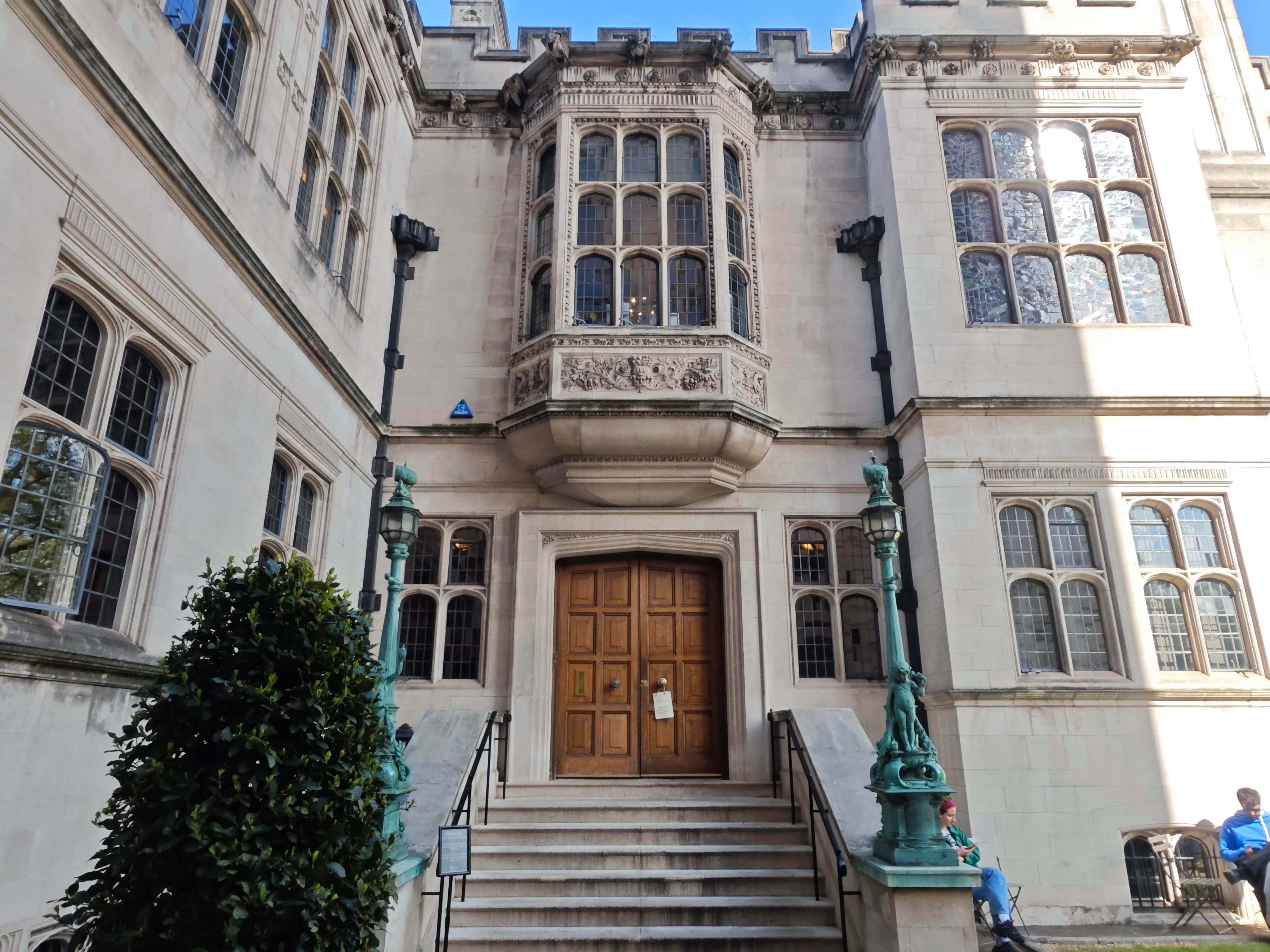
百年前的財富象徵
Two Temple Place 建於1895年,由阿斯特親自出資興建,作為他移居倫敦後的私人辦公室與寓所。阿斯特家族當時被譽為世界最富有的家族之一,這座建築便是他對文化、財富與歐洲藝術理想的具體投射。他邀請著名建築師約翰・洛堡羅・皮爾遜(John Loughborough Pearson)設計,融合都鐸復興(Tudor Revival)與哥德式風格,外觀莊嚴大氣,內部則細緻華麗,猶如一座濃縮的文藝殿堂。
外觀:低調門前,華麗內涵
推開鐵門,映入眼簾的是對稱石柱、草坪與簡潔拱門,低調的門面掩不住背後的精緻與雄偉。灰白石牆上繁複的雕飾與大片鑲嵌玻璃窗,讓人彷彿走進一座古典莊園。今日,這裡設有幾張宿天小桌,讓參觀者短暫歇腳或靜靜欣賞建築外觀的細節。
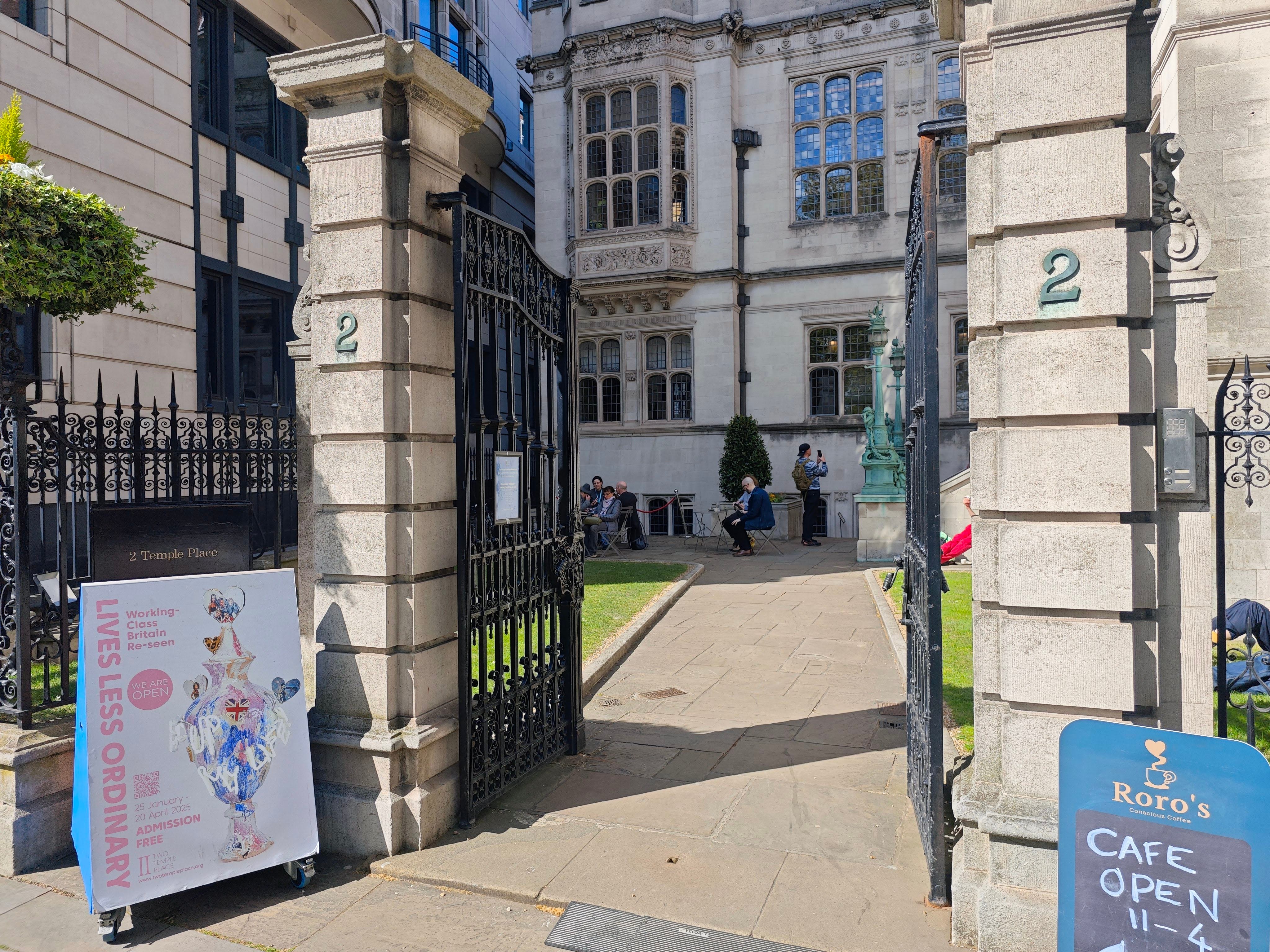
室內:雕木、彩窗與歷史細語
踏入大門後,首先來到的是接待處,右側即是 Lower Gallery 展覽空間。今年展覽以 “Lives Less Ordinary” 為題,呈現英國工人階級藝術家的作品。展廳不大,卻充滿故事,每幅作品都像是一則親密的生活片段,誠懇地訴說著日常與創作的張力。
看完這個展覽後,穿過一扇內門進入後方走廊,左轉即可抵達樓梯間。這座高聳的木雕樓梯,是整座建築的視覺焦點之一。深色橡木包圍的空間,四周雕滿歷史與神話人物,細緻程度令人讚嘆,每一步都像走進一段舊時光。
拾階而上至二樓,便來到 Upper Gallery 的環形遊廊。這裡俯瞰樓梯井,是一處既連通各房間又供人駐足的空間。沿遊廊南行,推門而入,即是壯觀的 Great Hall。


Great Hall:光與故事交織的殿堂
Great Hall 位於建築最前端,沿泰晤士河岸全長延展,屋脊高達35呎,空間顯得格外開闊。屋頂採用 hammer-beam 結構,是現代哥德式木作工藝的代表作,使用雕刻西班牙桃花心木打造,宏偉又精緻。整座大廳的牆壁以鉛筆雪松(pencil cedar)鋪設護牆板,色澤溫潤柔和,氣氛高貴莊嚴。
牆身上方環繞一圈由雕刻家納撒尼爾・希奇(Nathaniel Hitch)創作的金箔浮雕人物帶,共五十四位歷史與虛構人物以低浮雕方式呈現,包括茱麗葉(Juliet)、普魯士的路易絲皇后(Queen Louise of Prussia)與獅心王理查(Richard Coeur de Lion)等。在屋頂主樑與牆面交會處的拱形裝飾間,還可見十二位經典文學人物的立體雕像,如《艾凡赫》(Ivanhoe)、俠盜羅賓漢(Robin Hood)與瑪莉安(Maid Marian),彷彿整座大廳化身為時代記憶與文學傳奇的劇場。
東西兩側的彩繪玻璃窗,由 Clayton and Bell 製作,描繪「日出」與「日落」的景象。東窗呈現瑞士晨曦的山村、湖泊與牧羊人;西窗則展現義大利黃昏的葡萄園與農舍,象徵一天之始與之終,也暗喻生命的循環與時間的流動。


在 Great Hall 一角,還藏著另一件瑰寶——由雕塑家喬治・弗蘭普頓(George Frampton)創作的九幅銀鍍金浮雕,嵌於一扇桃花心木大門上。每塊面板均以低浮雕描繪亞瑟王傳說中的女性角色,靈感來自托馬斯・馬洛里(Thomas Malory)與丁尼生(Tennyson)的詮釋,包括:
阿瓦隆島的女士(Lady of the Isle of Avelyon)
百合少女伊蓮(Elaine)
湖中仙女(The Lady of the Lake)
摩根勒菲(Morgan le Fay)
桂妮薇兒(Guinevere)
美麗的伊索德(La Beale Isoude)
萊歐諾絲(Lyonors)
伊妮德(Enid)
美麗的朝聖者愛麗絲(Alis la Beale Pilgrim)
這些人物展現了勇氣、愛情、悲劇與神秘,讓整個空間在文學與歷史的氛圍中靜靜說話。


彩繪穹頂:文化、家族與權力的象徵
Two Temple Place 最具標誌性的彩繪玻璃穹頂,坐落於主樓梯上方的中庭天花板,由 Clayton and Bell 製作,於1895年完工。這座穹頂由多格玻璃組成,結合光線、色彩與象徵圖案,是建築內部最具精神象徵的建築元素之一。
穹頂中央標示「1895」字樣,明確記錄建築的完工年份。整體設計融合哥德復興與文藝復興風格,圓拱窗格間佈滿象徵意涵豐富的圖騰元素:
紋章與徽記:盾徽、騎士象徵、Astor 家族紋章與英美連結圖案,象徵家族榮耀與忠誠。
植物圖案:如玫瑰、百合、橡葉,象徵純潔、高貴、長壽與精神美德。
王冠與權杖:表達 Astor 對英國貴族文化的嚮往與自我定位。
文字與年份:如「1895」等標記,記錄建築誕生與文化身份。
穹頂不只是光源與裝飾,而是一場文化權力的宣示。它集結了 Astor 對藝術、家族、學問與階級認同的想像,也讓這座私人建築升華為一處結合智慧、象徵與美學的知識神殿。


藝術殿堂的現代轉身
今日的 Two Temple Place 由慈善機構 The Bulldog Trust 管理,每年僅在春季短暫開放,舉辦免費展覽推廣藝術。這座昔日只為權貴開放的建築,如今向每一位訪客敞開大門,在歲月流轉中重生為文化共享的空間。
離開前的回望
臨別時,我在門外那張宿天小桌旁佇立片刻,望著這座靜靜佇立於泰晤士河畔的建築。百多年前的阿斯特在此落腳,將他對藝術與文明的追求寄託於一磚一瓦;而今日的我,也在倫敦書寫屬於自己的段落。或許我們都在這條不斷移動的路上,尋找一處能容納記憶與夢想的所在。
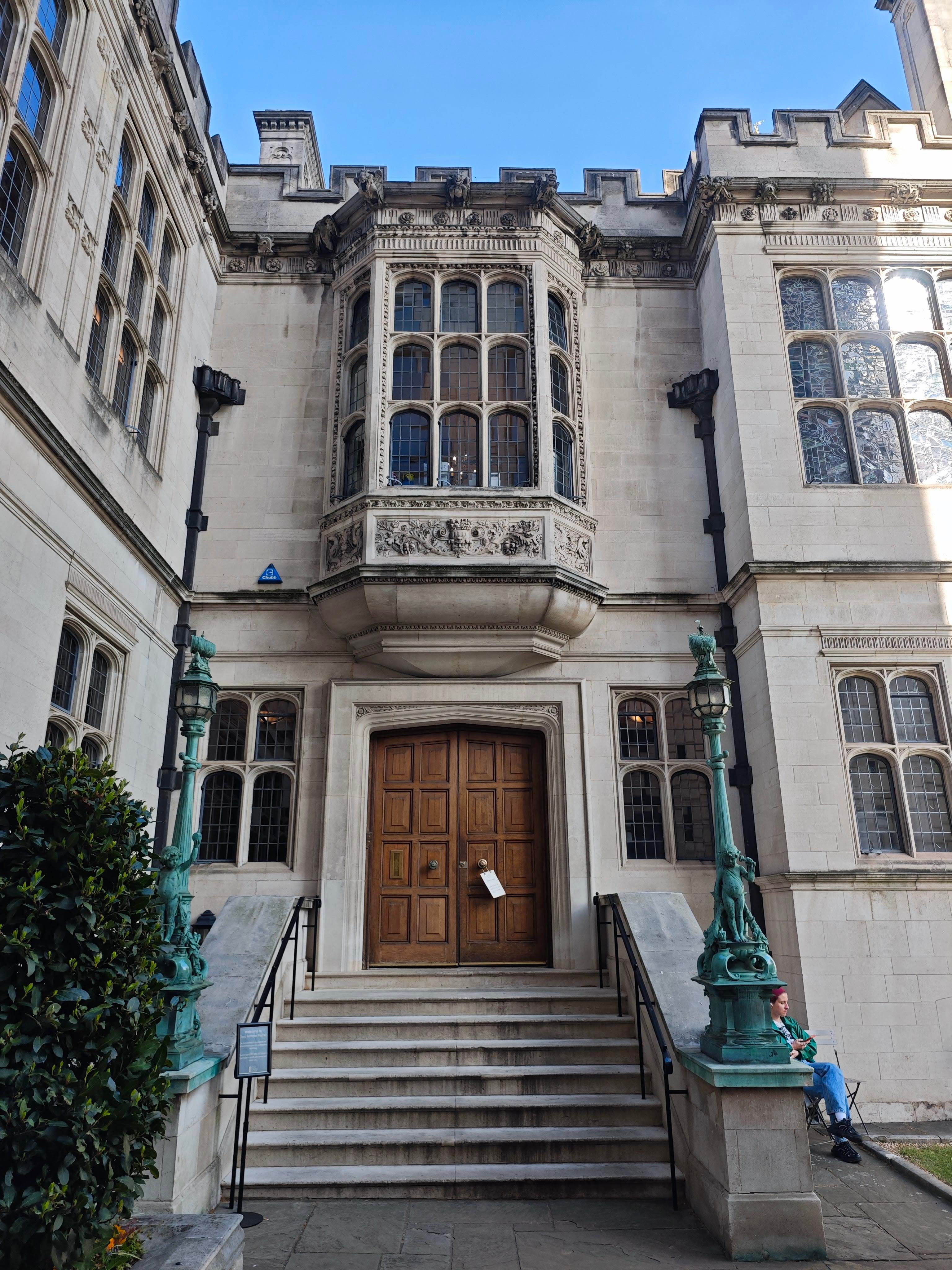
In recent years, a growing number of Hongkongers have chosen to relocate to the UK, seeking a fresh chapter of life in a foreign land. Wandering the streets of London, one may occasionally encounter a subtle resonance between the familiar and the unknown. Two Temple Place is precisely such a place—a site that invites quiet reflection. It is not only an architectural gem but also a poignant story of migration, culture, and identity. Over a century ago, American magnate William Waldorf Astor crossed the Atlantic to settle in London. He left behind this opulent residence, marking the beginning of a new phase in his life.
A Symbol of Wealth from a Bygone Era
Built in 1895, Two Temple Place was commissioned and funded by Astor himself, intended as his private office and London residence. At the time, the Astor family was considered among the wealthiest in the world. This building was a tangible projection of his ideals surrounding culture, wealth, and European art. He enlisted renowned architect John Loughborough Pearson to design it in a style blending Tudor Revival and Gothic influences. The exterior is dignified and imposing, while the interior dazzles with intricate opulence, resembling a condensed palace of the arts.
Exterior: Modest Facade, Majestic Heart
Beyond the iron gates lies a tableau of symmetrical stone columns, lawns, and austere archways—a subdued entrance that belies the splendour within. The greyish-white stone walls are adorned with elaborate carvings and large stained-glass windows, evoking the elegance of a classical estate. Today, several quaint tables are set outside, offering visitors a quiet place to pause and admire the architectural details.
Interior: Carved Wood, Stained Glass, and Whispers of the Past
Upon entering, one is greeted by the reception area, with the Lower Gallery exhibition space just to the right. This year’s exhibition, Lives Less Ordinary, showcases the works of British working-class artists. Though modest in size, the gallery is rich in narrative; each piece offers a candid glimpse into the tension between daily life and artistic expression.
After viewing the exhibition, a side door leads into a corridor, and turning left brings you to the staircase—a soaring masterpiece and one of the building’s visual highlights. The dark oak setting is enveloped by carvings of historical and mythical figures rendered in astonishing detail, as if each step transports you further back in time.
Ascending to the first floor, you arrive at the circular Upper Gallery. Overlooking the staircase, it serves as both a passage and a pause. Heading south along the gallery and through a set of doors, you enter the spectacular Great Hall.


The Great Hall: A Theatre of Light and Legend
Positioned at the building’s forefront along the Thames, the Great Hall extends the full length of the riverfront façade, with a roof soaring 35 feet above. Its hammer-beam roof structure stands as a crowning achievement of modern Gothic woodwork, crafted from richly carved Spanish mahogany—grand yet graceful. The walls are clad in warm-hued pencil cedar panelling, creating an atmosphere of refined solemnity.
Encircling the upper walls is a gilded frieze by sculptor Nathaniel Hitch, featuring 54 figures from history and fiction, including Juliet, Queen Louise of Prussia, and Richard the Lionheart. Set within the arches where the roof beams meet the walls are twelve three-dimensional sculptures of literary characters—such as Ivanhoe, Robin Hood, and Maid Marian—transforming the hall into a stage for collective memory and storytelling.
On either side, stained-glass windows by Clayton and Bell depict the rising and setting of the sun. The eastern window shows an alpine village at dawn, with shepherds by a lake, while the western window portrays an Italian vineyard at dusk. Together, they symbolise the cycle of day and life, the passage of time, and the constancy of renewal.
In one corner of the Great Hall lies another treasure: a set of nine silver-gilt relief panels embedded in a grand mahogany door, created by sculptor George Frampton. Each panel depicts a female figure from Arthurian legend, inspired by the writings of Thomas Malory and Tennyson:
The Lady of the Isle of Avelyon
Elaine the Lily Maid
The Lady of the Lake
Morgan le Fay
Guinevere
La Beale Isoude
Lyonors
Enid
Alis la Beale Pilgrim
These figures embody courage, love, tragedy, and mystique, allowing the room to speak softly in the language of myth and memory.
The Stained-Glass Dome: A Symbol of Culture, Lineage, and Power
The most iconic element of Two Temple Place is the stained-glass dome above the main staircase, completed in 1895 by Clayton and Bell. Composed of multiple stained-glass panels, it marries light, colour, and symbolism into a spiritually resonant centrepiece.
At its core, the dome is inscribed with “1895”, marking the year of the building’s completion. Its design combines Gothic Revival and Renaissance motifs, richly adorned with symbolic imagery:
Heraldry and Emblems: Shields, knightly icons, the Astor family crest, and Anglo-American motifs reflect family pride and transatlantic ties.
Botanical Symbols: Roses, lilies, and oak leaves signify purity, nobility, longevity, and moral virtue.
Crowns and Sceptres: Echoing Astor’s admiration for British aristocracy and his aspirations within it.
Inscriptions and Dates: Etchings such as “1895” preserve the building’s cultural genesis.
The dome is not merely a decorative skylight; it is a declaration of cultural power. It encapsulates Astor’s vision of art, scholarship, family, and social stature, elevating the private residence into a shrine of knowledge, symbolism, and beauty.
A New Chapter for a Historic Sanctuary
Today, Two Temple Place is managed by the charity The Bulldog Trust and opens briefly each spring for free exhibitions promoting the arts. Once reserved for society’s elite, the building now welcomes all, reborn as a space for cultural sharing amid the passage of time.
A Farewell Glance
Before departing, I stood briefly by one of the small outdoor tables, gazing at the building quietly nestled along the Thames. Over a century ago, Astor made his home here, embedding his pursuit of art and civilisation into every brick and beam. Now, I too write my own story in London. Perhaps we are all, in our own ways, seeking a place where memories and dreams may quietly coexist.