
平凡中的不凡:英國工人藝術展下的港人共鳴
The Extraordinary Within the Ordinary: Resonance of Hongkongers at a British Working-Class Art Exhibition

倒數一日的文化之旅
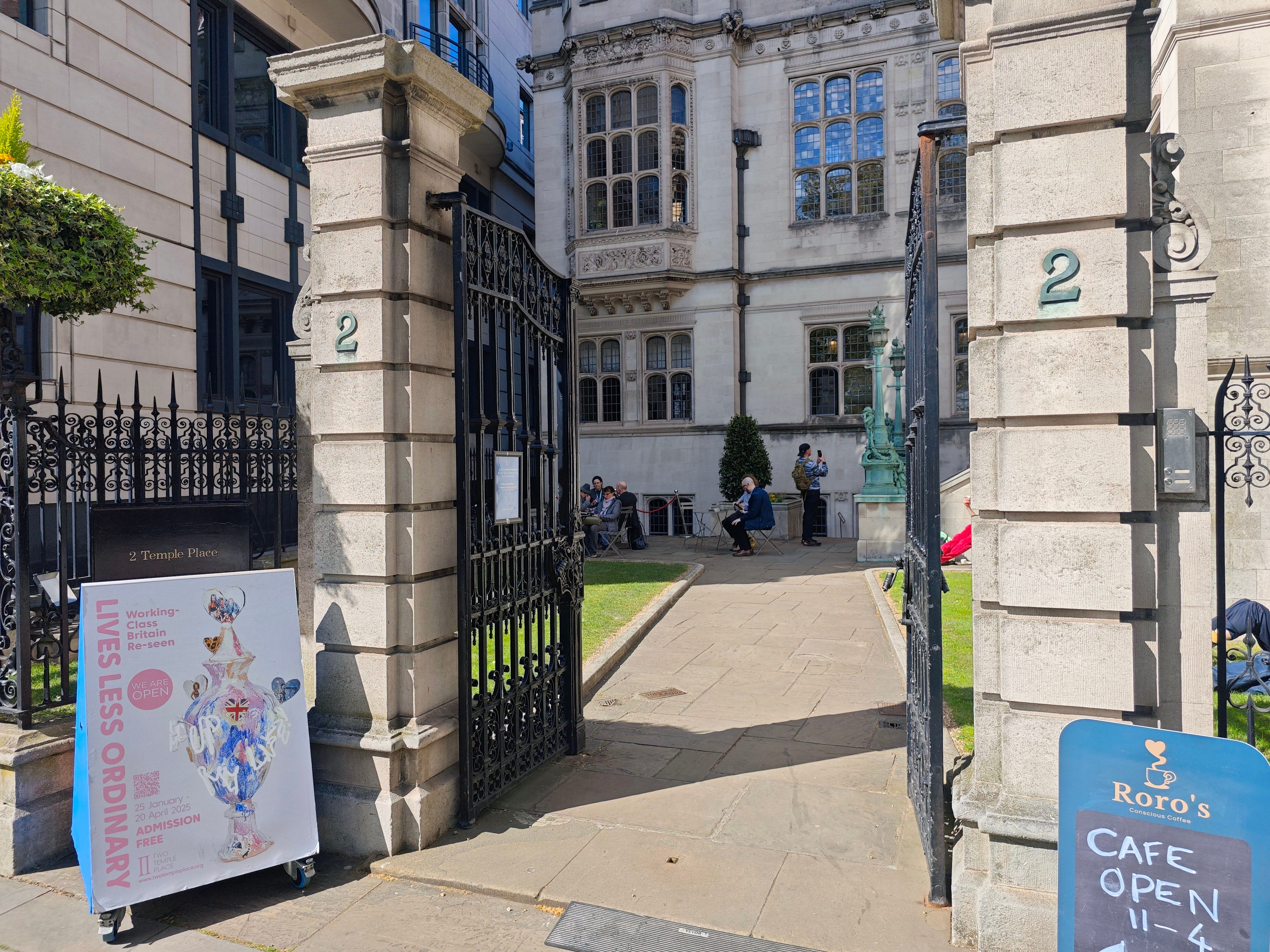
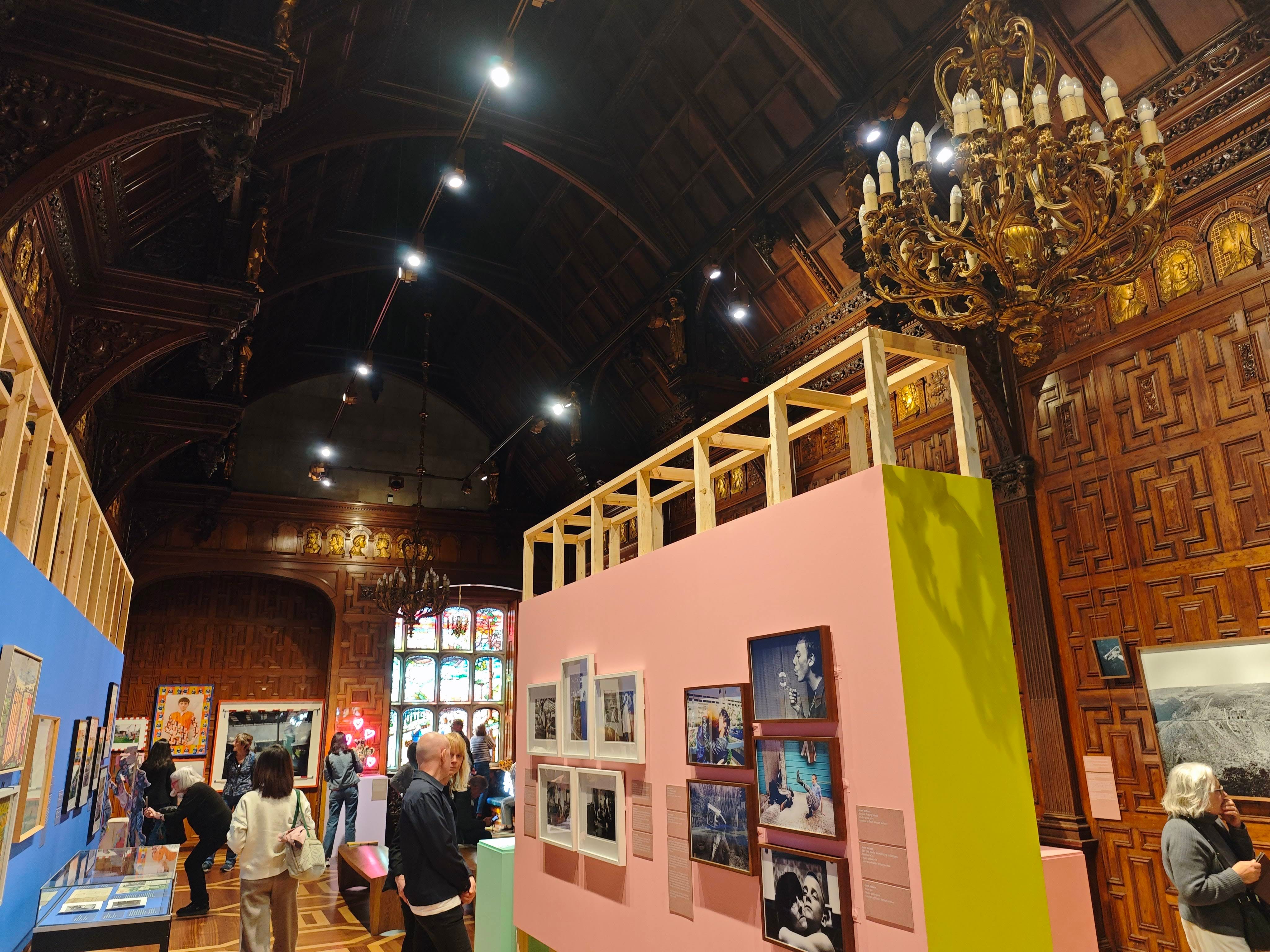
四月十九日,一個倫敦陽光明媚的午後,我踏進 Two Temple Place,把握《Lives Less Ordinary》展覽結束前的最後時光。這場由一月底開始、至四月二十日完結的展覽,是這座十九世紀哥德式建築為數不多對外開放的機會之一。若非今日趕上尾班車,便得等到來年展覽季,方能再次踏入這座美輪美奐的殿堂。這場觀展,不只是對工人階級藝術的欣賞,更是一場與「歸屬」與「記憶」相關的文化對話。
在家庭日常中看見詩意
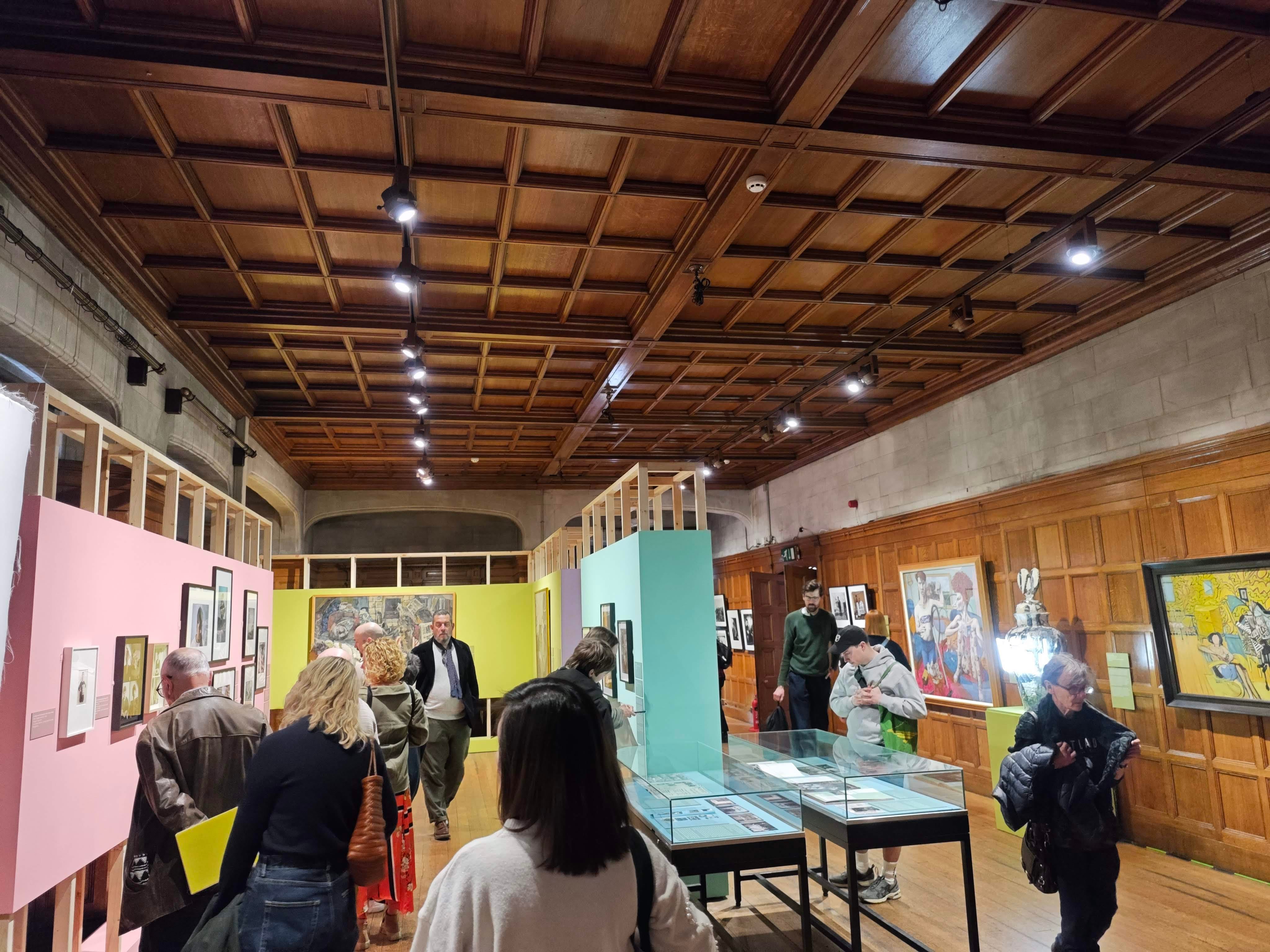
展覽集合超過六十位藝術家,呈現自1950年代以來英國工人階級生活的多元面貌。攝影、陶藝、繪畫、影像與裝置並陳,打破人們對「勞工藝術」的既定印象,呈現的不只是困苦與抗爭,更多的是家庭親情、社群連結,以及日常生活中最真切的詩意。
在「Where the Heart Is」展區,一張由 Bert Hardy 拍攝的照片吸引我駐足:兩名男孩手挽手在格拉斯哥街頭奔跑,笑容燦爛,展現十足童真。這原是為《Picture Post》拍攝的委託作品,但因氣氛過於樂觀,未符合雜誌對工人階級「艱苦形象」的需求而遭排除。這段背景說明令人深思,也反映媒體如何塑造我們對階層的想像。
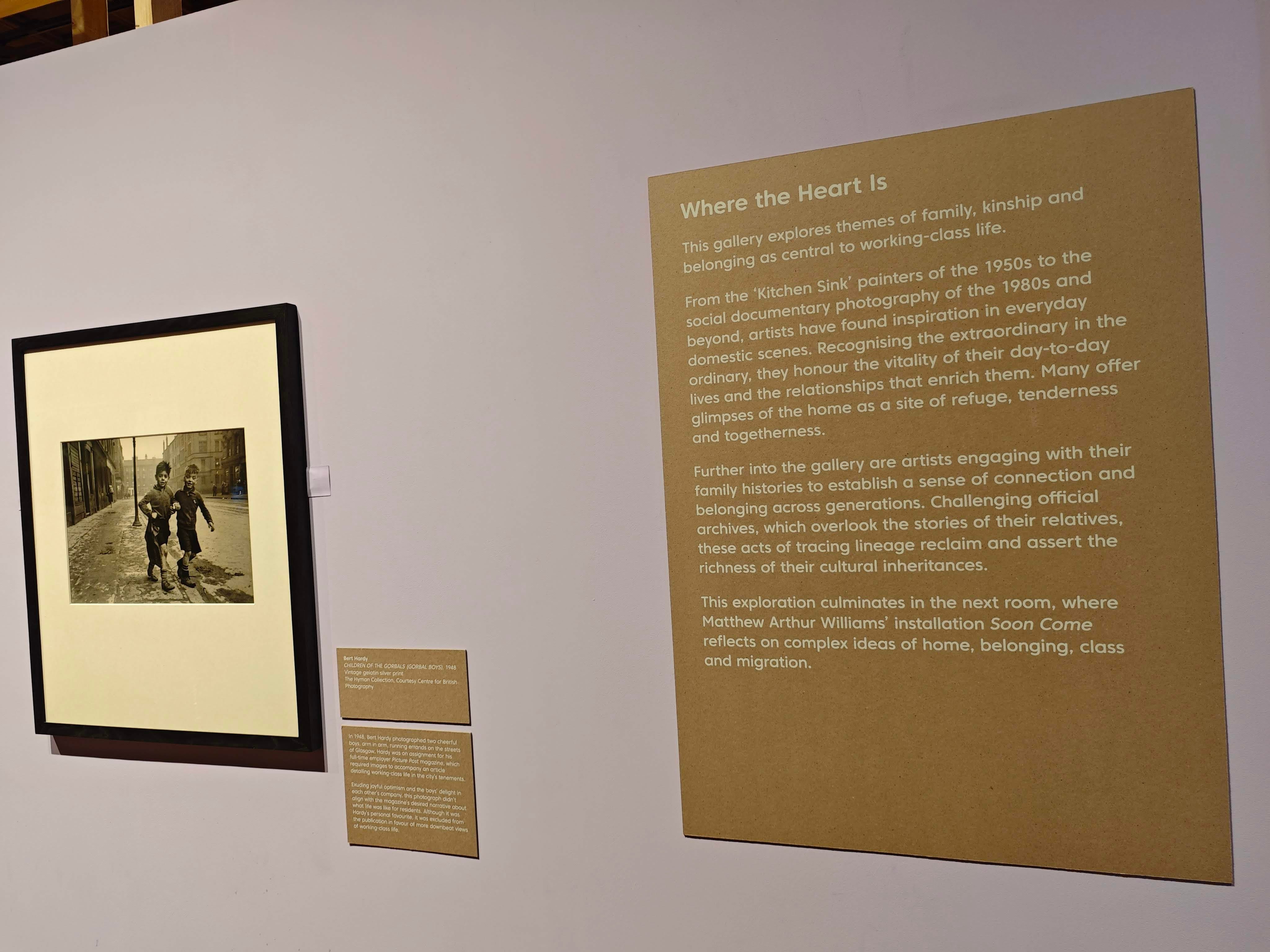
展板寫道:「藝術家從日常家庭場景中尋找靈感,重申親情與歸屬感對工人階級生活的核心地位」(Recognising the extraordinary in the ordinary, they honour the vitality of their day-to-day lives and the relationships that enrich them.)。我腦海浮現香港小學生放學時,在老師帶領下魚貫步出校門、家長迎接擁抱與零食的畫面——這份庶民日常中的柔情,無論中英,皆動人心弦。
當藝術走進廚房與客廳
在1970年代,由 Monica Ross、Kate Walker 與 Su Richardson 等女性藝術家共同發起的「Postal Art Event」尤為觸動人心。她們以拼貼、刺繡與日常家務物件為媒介,把家庭勞動轉化為詩意與批判兼備的作品,挑戰藝術界根深蒂固的性別與階級偏見。展板上寫道:「藝術如同煮食,如同生產,如同呼吸,我們的藝術是古老的魔法」(Art is like cooking. Art is like childbirth. Art is like breathing. Our art is ancient magic.)。
這種將藝術融入生活的精神,也讓我想起同一時期香港的家庭式作業:在經濟起飛的年代,許多基層婦女在家中進行穿膠花、剪線頭、摺紙盒等工作,邊照顧家庭、邊賺取微薄收入。一張飯桌就是工作台,一家大小總動員。她們或許未以藝術為名,卻以雙手與耐性構築出庶民生活的另一種美感與尊嚴。
隱形的勞動,集體的記憶
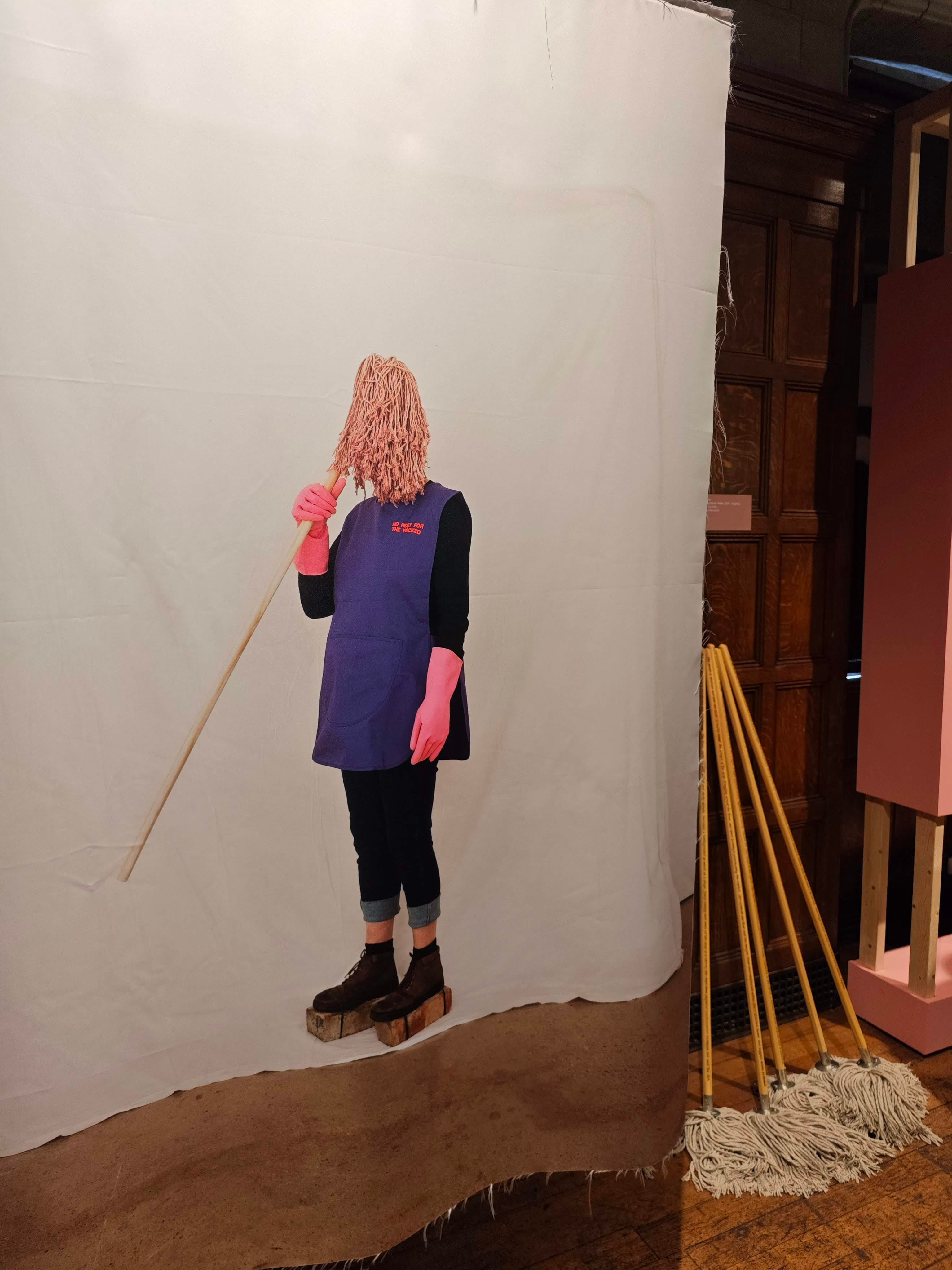
展覽中也不乏挑戰刻板印象的作品。一幅照片中,一位穿著工作服的女性,頭部被拖把取代,象徵家庭勞動的無形與被忽略。這種視覺語言令人想起無數在香港默默付出的女性——她們可能不是藝術家,卻以日復一日的勞動撐起家庭與社區的重量。
在抗爭與創作之間
與英國的工人藝術實踐相呼應,香港的基層社群與年輕一代,也曾用創意回應時代的震盪。在2014年的雨傘運動與2019年的社會運動中,街頭出現雨傘、連儂牆、防毒面罩與「香港加油」的變體圖像,青年人以繪畫、設計、塗鴉甚至服飾,將抗爭轉化為文化語言。這些創作既是時代記錄,也是一場庶民藝術的覺醒。
我在展覽空間一隅看到一段話:「即使我們身處異地,我們的藝術依然連結彼此;我們的藝術,是平凡而實用的魔法」(Our artwork is together even when we are apart. Ours is ordinary + useful magic.)。這句話深得我心。香港的藝術發展雖面對制度壓力與空間限制,小小一個動作或表達方式,在某些權貴眼中可能已被視為「軟對抗」,但民間從未停止創作的腳步。從街頭藝術到社區劇場、從手作市集
到數碼插畫,那些看似微小的創作,其實正是香港人不服輸、不認命的寫照。
結語:從倫敦回望香港
《Lives Less Ordinary》是對英國工人階級生活的深情頌歌,也是一面讓我照見自身記憶的鏡子。在倫敦,我看見與香港平民社群平行共鳴的故事;在藝術之中,我再次確認「平凡」從不是貶義,而是那些最真實、最不可忽視的生命力量。
A Cultural Journey on Its Final Day
On a sunny London afternoon, 19th April, I stepped into Two Temple Place, seizing the final opportunity to visit the exhibition Lives Less Ordinary before it concluded on the 20th. Running since late January, the exhibition not only marked a rare occasion when this nineteenth-century Gothic mansion was open to the public, but also offered a unique cultural dialogue on belonging and memory, beyond a mere appreciation of working-class art. Had I missed this last chance, I’d have had to wait until the next exhibition season to re-enter this splendid hall.
Discovering Poetry in the Everyday
The exhibition brought together works by over sixty artists, presenting the diverse realities of British working-class life from the 1950s onwards. Through photography, ceramics, painting, film, and installation, it shattered stereotypes of “labour art” as solely about hardship and protest, instead highlighting themes of family, community, and the profound poetry of everyday life.
In the Where the Heart Is section, a photograph by Bert Hardy drew my attention: two boys holding hands, running joyfully down a Glasgow street, beaming with innocence. Originally commissioned for Picture Post, the image was deemed too cheerful and excluded for not fitting the magazine’s preferred narrative of working-class struggle. This context invites reflection on how media shape our perceptions of social class.
One exhibition panel read:
“Recognising the extraordinary in the ordinary, they honour the vitality of their day-to-day lives and the relationships that enrich them.”
Images of Hong Kong schoolchildren flooding out of school gates under teachers’ watchful eyes, greeted by parents with hugs and snacks, came to my mind — tender moments of everyday life that resonate deeply, whether in Britain or Hong Kong.
When Art Walks Into the Kitchen and Living Room
One particularly poignant initiative was the 1970s Postal Art Event, spearheaded by female artists including Monica Ross, Kate Walker, and Su Richardson. Through collage, embroidery, and domestic objects, they transformed housework into works of both poetry and protest, challenging entrenched gender and class biases in the art world. As one panel stated:
“Art is like cooking. Art is like childbirth. Art is like breathing. Our art is ancient magic.”
This spirit of art embedded in life reminded me of similar scenes in 1970s Hong Kong. As the economy took off, many grassroots women engaged in piecework at home — threading plastic flowers, trimming threads, folding cardboard boxes — earning modest sums while raising families. The dining table became a workstation, with every family member pitching in. Though they may not have called it art, through their hands and patience, they cultivated a quiet beauty and dignity in everyday life.
Invisible Labour, Collective Memory
The exhibition didn’t shy away from confronting stereotypes. One photo depicted a woman in workwear, her head replaced by a mop — a stark metaphor for the invisibility of domestic labour. The imagery was evocative of countless women in Hong Kong whose silent, tireless work holds up households and communities. They may not be artists, yet their daily toil is no less a form of creation.
Between Resistance and Creation
Echoing British working-class artistic expression, Hong Kong’s grassroots communities and youth have also turned to creativity in response to social upheaval. During the Umbrella Movement in 2014 and the protests of 2019, the streets became galleries for transformed symbols — umbrellas, Lennon Walls, gas masks, and variations of “Add Oil, Hong Kong.” Young people used painting, design, graffiti, and even fashion to turn resistance into a cultural language. These expressions were both records of an era and a form of people’s art awakening.
Tucked away in a corner of the exhibition space was a quote that struck a deep chord with me:
“Our artwork is together even when we are apart. Ours is ordinary + useful magic.”
This sentiment mirrors the reality in Hong Kong. Despite institutional constraints and limited space, creativity has never ceased. A small gesture or form of expression — perhaps seen as “soft resistance” by the powerful — still carries immense meaning. From street art to community theatre, craft markets to digital illustrations, these seemingly humble acts are a testament to the spirit of a people who refuse to surrender.
In Closing: Looking Back at Hong Kong from London
Lives Less Ordinary is a heartfelt tribute to the lives of Britain’s working class, and for me, a mirror reflecting fragments of my own memory. In London, I saw stories that echoed those of Hong Kong’s grassroots communities. Within the art, I was reminded again that ordinariness is never a weakness — it is, in fact, the most genuine and unyielding force of life.